In the Fall of 1940, Nazi bombers rained death and suffering down on Britain as a preliminary to a planned invasion and all Civilization trembled.
In this time of Wrath, a dying doctor forgot his own troubles to Remember Mercy... and ushered in the Age of Life-Saving Antibiotics.
Tuesday, July 27, 2010

Baby Patricia & Penicillin in Comic Book
In 1944, True Heroes Comic Books featured the inspiring story of Dr Dante Colitti saving the life of two year old baby Patricia Malone, August 11th 1943, with some penicillin that he, the child's father and the Hearst media empire had wheedled out of a hard-nosed American medical establishment.
This was the event that made penicillin known world wide, virtually over night after 15 years of being ignored.
Colitti's hospital and Dr Dawson's hospital shared the same catchment area for patients, being only a mile apart.
News of Dawson's cures, that Spring, of a number of women with the incurable disease of SBE had spread like wildfire among the patients and staff of both hospitals , leading to Colitti trying the stuff on his dying young patient...
Sunday, July 25, 2010
outline for "Remember Mercy, Manhattan's OTHER Project,1940-1945"
As always, subject to changes, and changes back, and forth....
The cover will feature a group of the main characters clustered around a hospital bed, in mid August 1944, Presbyterian Hospital, New York City.
Clustered, as if posing for a photograph.
I don't know if any happy friend or relative of a family brought back from the brink of
death by Dr Dawson ever did take such a celebratory snapshot.
But I would be very surprised if none ever did.
The artwork painting is a vignette. A half circle of light emerald green paint ( aka institutional green) swirls across the top.
In huge hand lettering around that half circle of green, is Remember Mercy, letters so big they threatened to burst out beyond the edges of the paper.
From across a bookstore, those two words should be all that you can distinctly see or read.
Below the clustered figures and the hospital bed, in much smaller hand writing, is Manhattan's other Project, 1940-1945. Those words now curves upwards at either end, to symbolically complete the circle with the words above.
Below the words, the green emerald paint vignettes off.
This is the cover 'teaser' copy.
On the inside title page, the actual subtitle is simply Mo goes Po ,beneath Remember Mercy.
Also on the title page, I mention this book is dedicated to the memory of Judith Hamel, "who like Dawson, was much too willing to step into the breach, when she was needed..." and indicate that I wrote it to inspire young people, considering a vocation in the Health Science...
Now back to the figures clustered around the hospital bed.
I don't know the name of the young mother in the bed, with her happy soldier husband and her new baby at her breast, only her age and her initials and the key dates and medical details.
G.L. was 21 in 1944, born 1923 +/- , had had a child on March 5 1944, despite a history of Rheumatic Fever leading to serious heart problems.
I can only imagine many saying her getting pregnancy-induced terminal SBE served her right.
Dawson didn't agree.
On July 22nd he started her on Penicillin and in three days her blood was sterile of SBE bacterial colonies. On August 19th she went home to be with her husband, who had been granted leave, presumably to bury his wife and put his new child up for adoption.
Seen in 1945-1946 she remained a picture of perfect health .
But the date I am photographing is a little earlier, August 15th 1944, it is the day that the very starts of the story effectively take leave of the story.
I see GL having an IM drip of bright glowing yellow white penicillin flowing into her arm and the yellow glow of the fluid bag on high dominates the entire image.
But back to the two departing starts to this culmination scene.
Start #1 is Charlie Aronson, Patient One of the Age of Antibiotics, has been cured a second time of SBE by Dawson and penicillin.
He is almost certainly in a wheelchair, has had a stroke,perhaps is on a IV fluids bag, but he is a survivor,has beaten much worse.
Sure enough,Charlie, the patient with nine or more lives, is still around, when last checked in upon, in March 1946.
In another wheelchair, perhaps, is Start #2 , Dr Martin Henry Dawson, for whom August 1944 is also wrap in many senses.
Curing GL and Charlie is a wonderful end to this run of patients . JAMA's editor Morris Fishbein, head of the national medical censorship forces, has agreed to publish a long article from Dawson on his SBE successes since September 1940, in early 1945, so the article has to get started right away.
Since his own doctors and Dawson himself privately wonder if Dawson will be alive in early 1945, the earlier the publication the better: as a fitting culmination to a life well lived and a symbol of his triumph over the resistant of the medical elite, Fishbein among them, to his vision of what penicillin can do for SBE.
Dawson's name is on one or two more papers, but perhaps more in tribute, he is getting more and more life-threatening MG 'incidents' where his lung muscles suddenly stop working - ambulances, emergency care, oxygen
tanks, stays at home in enforced bed rest while he frets about his patients.
Perhaps Dawson has an oxygen tank with him this day, attached to his wheelchair, like Charlie.
Both Charlie and Dawson, frankly, look deathly ill. But they are grinning ,ear to ear, their two arms feebily locked in a victory clasp.
beside them is Marjorie, with her cane, for her bad days with her hip - here to take her husband off to celebrate.
Meyer & Chaffee are off busy with their hydraluronic acid work and Hobby is working at Pfizer - so the rest of the Mercy Project aren't available for this historic photo.
But Floyd Odlum is here, in his crutches and so is Dr Tom Hunter in his crutches.
The weak and the foolish, pause, for a photo shot, to mark their victory over the mighty and the wise....
Friday, July 23, 2010
Only now its "Les douze ans perdu"
People sometimes ask ,"how is my book on life in Canada's new frontier towns of the 1950s going?"
The book was called "Les dix ans trouve" --- all about the postwar determination to make up for the years lost to the Great Depression AND World War One.
That's right WW One - not WW Two .
Well I have abandoned that book, permanently I fear - for my new project on Martin Henry Dawson.
But do I look like a guy who wastes anything ?
Let alone someone who ever wastes research or literary scribbles.
Much of the earlier book's themes are still alive in the Dawson project - only now the heroine is Ms Penicillin and her Great Depression lasts from the Fall of 1928 to the Fall of 1940.
In a tribute to the Broadfoot Depression classic "The Ten Lost Years" , her travails I call "The Twelve years Lost"....
read more about it over at the blog "Mo goes Po" .
(And check out that blog's fantastic collection of Martin Henry Dawson photos at "Mo goes Po" .)
Penicillin's "GREAT DEPRESSION" finally ends Oct16/40
She finally got a decent job, a real job,a permanent job, on that day in a small green room in New York City - and she has never really looked back.
For her, the nightmare of Les Douze Ans Perdu (The Twelve Years Lost), were finally over.
In relation to this seachange for Ms penicillin, the nicest thing I have found anyone ever said about Martin Henry Dawson was said, ironically, by one of his fiercest opponents.
Dr Stanhope Bayne-Jones and Dawson had clashed in 1939 at an important medical meeting, over the etiology of one variant of rat bite fever.
Things like this happen all the time - the best don't hold grudges, but Bayne-Jones did and more importantly, he was in 1941 a very big somebody in the nexus of academic-military-governmental medical affairs of an American nation about to go to war.
So in July 1941, when Howard Florey, desperately worried that Dawson was about to beat him to the laurels for penicillin ( Dawson was not competing with Florey - he was trying his darnest to help Florey, but Florey was nothing if not paranoid), asked Bayne-Jones about Dawson's reputation, he got an earful.
In strictest confidence Bayne-Jones confided, the guy is is quite honest, but "uncritically enthusiastic".
There are no worse words to hear for the sort of practical,sober,sensible men who end up as science administrators --- people like Florey and Bayne-Jones.
Penicillin, by contrast, loved those words.
For twelve long cold years, she had languished in the custody of sensible practical men.
Many had looked her over carefully, as if she was a possible choice of a new race horse , her good and bad points carefully and thoughtfully weighed but in the end, never once invited to the Meet.
Finally she had met a guy, with a lot of faults of his own, but someone who loved her unreservedly, despite of all her many downsides.
On the human side of things, he already had a wive and kids, and penicillin was far from being his only beau in science.
He had given his heart just as unreservedly to HGT & Quorum Sensing, at a time when all the practical men dismissed it as just another laboratory oddity.
But what penicillin so badly needed right then was a little walk on the bad side, with a wild man and a fool, someone who drove too fast and loved too hard.
Any every once in a while, unlikely as it seems, the normally cautious Dawson threw off all traces and just 'went for it'.
His caution was frequently reserved most strongly for the fashionable verities of the day, and he was just as willing to champion an unfashionable idea if he felt it had merit , as he was to criticize an idea held up by all the authorities of the day as worthy of attention.
"Martin Henry Dawson: "Uncritically enthusiastic" for DNA & Penicillin, at a time when all the sensible authorities dismissed them"
I like it - it seems a suitable epitaph ...
Thursday, July 22, 2010
As Peaceful Atom fades, Penicillin steps in
At the promise of Atomic Energy "too cheap to meter "fades away, journalists have refocused on penicillin as proof that the Allied cause was just and worth all the deaths.
Penicillin has become proof that nations can work together to develop a common savior for all humanity - and that Big Science, like Big Media (where most journalists work), succeeds when freelancers like Alexander Fleming can only take things so far.
But I have said, viv vis 1940,'broad spectrum' Natural Penicillin and Atomic Bombs were definitely Plan B to the expected war-winners : tightly targeted Sulfa drugs and precision Norden Bomb Sights --- Pen and A-Bombs were the low tech solutions to problems created when hi tech science failed big time...
Censorship/Propaganda joined at the Hip
Censorship or Propaganda only work if the two proceed in tandem: lies broadcast widely are only truly believed if the truth is first smothered and buried.
Almost all accounts of "the first ever x-type patient from the y-region treated/cured with penicillin" are untrue, lies and knowing lies, promoted by officials for a wide variety of reasons but never to simply tell the truth.
I collect these tales, with a mixture of anger at how readily journalists swallow bull feces
and sardonic amusement on the continued boldness of the liars.
Fleming and the dying policeman in Oxford (or is it at St Mary's?)
Florey and the policeman in Oxford.
Florey and Fleming fighting over their share of the glory of the first person treated with penicillin in America - a tale promoted originally by the bureaucrats at the American OSRD and then co-opted by the bureaucrats of the British Council and the American State Department.
Who was the first serviceman treated with penicillin - someone who got very drunk while off duty and woke up in hospital, the son of a Lord getting special treatment, or someone wounded in battle doing something very brave ?
Just guess who became the 'official first' there?
And then what about the first penicillin patients in those all important but sometimes awkward allies, the Canadians and the Aussies?
One account has the first Canadian treated (Picton Ontario) having being abruptly refused any penicillin by the Banting Foundation and then having to beg the Americans for a little of their Yellow Magic - which they were happy to rush to Canada to save this life.
It rings true, but it was buried - showing the Banting Institute of all places as heartless was 'just not on' in 1940s Canada ! (Sir Banting was the country's only native born Nobel prize winner.)
Australia had a bit of a problem with Yankee soldiers and their womenfolk but both nations badly needed each other during World War Two.
An opportunity arose to literally revive the "hands across the water" cliche and officials on both sides of the Pacific ran with it.
A bomber raced across the vast Pacific with penicillin for the dying son of a serving Aussie Naval Officer ( note that detail - no penicillin being wasted on the useless 4Fs or their children...)
Leaving San Francisco, it landed in Brisbane and then a plane took it to Sydney, saving the child's life.
The story came out of Melbourne (March 22nd 1944), released by Sir Alan Newton, chairman of the Medical Supplies Co-ordination Committee.
Mouthful of a title - very busy VIP for sure.
An A1, not an A2, priority cable was sent ( as it always is, in these type of purple prosed newspaper stories) to Mr L R Macgregor, Director-General of the (Aussie) War Supplies Procurement Mission in Washington.
Another very busy VIP.
He got on the blower to the Surgeon General of the US Army,(very busy VIP III), who authorized 1 million units of penicillin be put in dry ice and rushed by bomber to Brisbane, half a world away: in wartime, for a little boy, a non-combatant.
A few days later the boy is able to eat a normal meal - this is an essential part of all the penicillin stories involving little boys.
A common variant is that they wake up after hovering between life and death for days and loudly ask "when's chow?" and mother bursts into tears with relief and the hint of water wells up in the eyes of even the hardest of surgeons, etc.
Everybody knows all is it right with the world when a little boy's only thought is dinner.
This was officially described as "the first use of penicillin in Australia for civilians", in both countries.
Besides re-burnishing the 'hands across the water' friendship between Allies, the real intention of this whole charade was an attempt by these officials to reassure their twin bosses, the politicians and the voters that even during this busy deadly war, the Big People haven't forgotten 'the least among us', the little kiddies, the sick and dying children.
No stone was left unturned by the Big People to see that this innocent child's life was spared and while penicillin was in temporarily short supply, that problem "was being addressed" and soon all would have Penicillin.
And Victory and Full Employment and Housing for All.
In reality, this was 'The sixteenth Year without Penicillin' and people were complaining why it was taking so long to arrive.
Meanwhile some people - whose names should be remembered and honored but sadly are not - were doing more than just complaining about government,science and industry's lack of action.
They were rolling up their sleeves and making their own penicillin.
I call this penicillin agape penicillin or amare penicillin - the words mean basically the same thing.
Amateurs,(amare), making penicillin not for their own gain, making penicillin to help others,(agape), not their family and friends or the powerful.
In Brisbane, remember the place where the bomber landed - that nowheresville on the map, that point of transit en route between Washington and Sydney?
That is where the first civilian lives were saved with penicillin in Australia - way back
in November 1943.
I have blogged in The Arcadian Recorder about this tiny team - I am particularly amazed that no Aussie journalist has seen the fact that the whole life-saving effort hung on the use of Vegemite wasn't worth of at least a 'brite' .
I think this is because the tribe of journalists still buy into the Big Lie that World War Two was won not by the Allies' Big Armies but by their Big Science.
Evidence of amateur science playing a key role in World War Two discomforts the average journalist's sense of 'knowing the lessons' of the war.
Doctor James Vincent Duhig, along with Doctors David Grey and M Geaney, remains unknown to this day in his native land or in the rest of the world, despite his tale being written up in journal articles in 1944 and 1945 and ending up as a chapter subsection in the biography of Sir Howard Florey, the Australian usually credited with Penicillin's success.
They saved lives with the most basic of equipment and with very limited access to technical information and expertise.
I think Duhig's story was censored by the most effective method known - by being simply ignored.
My thesis - In Wrath Remember Mercy (Mo goes Po) - is that the entire penicillin story was pushed along by the contributions of about a half dozen similar 'agape amateurs' : Henry Dawson,Robert Pulvertaft, Rudy Schullinger, Frank Queen,John Mahoney,Dante Colitti, Jim Duhig - against the fulsome resistance of the penicillin bureaucracy and the pharma industry.
Let me credit one bureaucrat, Larry Elder of the WPB/OPRD, and one businessman, Harry Jephcott of Glaxo, as two more agape amateurs who should be honored fully.
Two others wanted to help and helped a very great deal, though I don't know their motives.
Raymond Rettew worked alone in rural Pennsylvia throughout 1942, working out such an successful little bottle operation that for 4 months it produced the most penicillin in all the world - successfully shaming the pharma companies to stop talking and to start walking on serious penicillin production.
Milislav Demerec, at Cold Spring Harbour Institute on Long Island, made up for its very large role in making Eugenics respectable, by working for years on creating better strains of penicillin fungi - this was the real crucial breakthrough the OSRD missed with its fixed idee of chemical synthesis. Merck & the OSRD (really the same unit in reality) turned him down flat - lucky that the WPB & Larry Elder wasn't as blinkered as Newton Richards of the OSRD/Merck.
Duhig came along late to the process and his activities in isolated wartime Brisbane had no direct impact on the penicillin story , during World War Two.
But he has haunted it ever since.
Historians still ask if Fleming had been as willing to simply inject raw penicillin juice into dying patients in 1929 as Duhig was in 1943, those few lives saved might spurred on the medical community to take up penicillin when it was first discovered.
And then millions of lives won't have been needlessly lost....
Monday, July 19, 2010
Columbia drops ball,Oxford runs with it
For ten months,(early September 1940-early July 1941) Columbia University had a clear lead on bringing mass produced penicillin to the world, but it blow it.
America had to give up its lead to Oxford University and the British. America lost the moral edge on this story.
But before Congress and the federal government bring out committees and commissions to investigate Columbia, it should remember it ,too, had a chance and it blew it.
"You sir, had a Choice"
Columbia and Washington may say 'we had no choice' but as Mulroney says, "you sir, had a choice."
During those same ten months, Columbia and America had another clear lead - in atomic energy.
This is the one that the federal government choose to fund, this is the one that Columbia administrators choose to find rooms for.
And as the Manhattan Project grew and grew, Columbia and the federal government found new rooms for it in the heart of Manhattan's traditional milk plant district, in north west Harlem, in the corridor connecting the downtown campus to the medical campus.
Even the Japanese hardly a milk-guzzling nation and totally cut off from all the events in Britain and America surrounding penicillin from 1940 to 1944, could instantly tell that every photo they could find of an interior of a penicillin plant looked like nothing but a typical milk plant.
Most of the world's first penicillin plants used the equipment,technologies,staff - and sometimes the very plants - of milk companies.
Columbia had the team - and very nearby it had the equipment, to start saving millions of lives, way back in 1941.
But it blew it - it morally blew it.
Columbia developed three world-shaking ideas on its campus during World War Two.
The Age of Antibiotics started there -millions of lives saved by the actions of a decorated frontline combat hero named Dawson.
With Adorno and Horkheimer's seminal text, in humble mimeographed form, the age of Postmodernity started there.
And the technology that powered the Cold War, on both sides, was started and perfected there - in that life-giving milk plant district - perfected by a life-long pacifist named Harold Urey.
Yes, most of the uranium that blew up Hiroshima was not made by Columbia's technology.
But the instance the war was over, the competing totally inefficient plants were closed and massive gas diffusion plants were built instead using Columbia's technology, to create the tens of thousands of bombs on all sides during the Cold War.
That same deadly uranium is still around, fashioned into today's current bombs.
Thanks Columbia, 'Home of the Cold War' !
Now if you went to the Columbia campus today , would you find a plaque to Dawson and Adorno or to Urey ?
You guessed right - Adorno and Dawson are non-persons but Urey and death are honored to the hilt at Columbia.
And in Washington.
The self-promoting Florey and Britain get all the moral glow of penicillin instead.
Columbia blew it - and it is still blowing it......
In Wrath remember Mercy
On page 162 of Gladys Hobby's "Penicillin: Meeting the Challenge" (1985) , the most through account to date of the early days of penicillin, she speaks of a daily trip she made to the SBE wards of NYC's Presbyterian Columbia Hospital, between 1940 to 1944.
Holding aloft a flask filled with a musty-smelling slimy mold, she would demonstrate its new growth before each SBE (Subacute Bacterial Endocarditis) patient,intended, as she explains, to keep their courage up as they faced an almost certain imminent death.
And to remind them that their treatment with this early penicillin might save the lives of millions of potential SBE victims after them.
As it has come to do so.
I use the word 'demonstrate' deliberately and in its original, religious, sense.
The word Monstrance (aka monstral or monstre) comes from the same Latin root for 'demonstrate' and was the solar sunburst shaped metal holder for the Blessed Host, as the Body and Blood of the Living Christ was displayed (demonstrated) before the eyes of the Faithful.
Traditionally, a modification of this public rite was preformed in private, before the sick and dying, in the visitation to them with a Blessed Host inside an elaborate variation on the humble pyx, to keep their Faith and courage up in the face of death and pain.
Fair and good, but why was Gladys Hobby, of all people, carrying around and displaying a Monstrance of a circle of emerald green mold surrounding central drops of the purest gold?
Hobby was nothing if not a faithful Presbyterian and the very last Presbyterian to carry about a Monstrance , rather than melt it down for its gold and jewels, was probably Paul of Tarsus !
Green and emerald had a deep significance to the people of the Old and New Testament that almost any visitor to the Middle East can instantly appreciate as they try to escape the 'merciless heat' of the sun.
The rare shady cool green trees were literally merciful and so emerald green was easily given a deep religious significance - representing one side of the Janus-like Jehovah.
Janus,Jehovah and Jesus.
God was often described via three colorful gemstones: jasper, sardius and emerald.
They meant high grade jasper obviously, because their jaspar was described as clear/transparent and bright and unflawed as crystal - "brighter than a thousand suns" - and represented the awesomeness of God.
But God, Janus-like ,was awesome in two directly opposing ways that yet were successfully combined in one being (a rather Marx-like thesis/antithesis/synthesis!)
Sardius was a fiery flame like red and represented Revelations' "Lake of Fire" - the fierce thirst for justice of the Jehovah of Wrath.
But God also had an equally fierce thirst for mercy - emerald green, soothing mercy, Jesus's color.
Revelations 4.3 has God on His throne on the Day of Judgement, all jasper bright and sardius angry ( cue the thunderbolts) but, thankfully,with a circle rainbow of emerald mercy surrounding him .
Thus fulfilling the key phrase of the book of Habbakuk (Hab 3.2): "In Wrath Remember Mercy".
The Manhattan Pilot did not focus on 1A patients during World War Two, as their government wanted them to.
Instead the tiny team turned 180 degrees away to focus on the lowest of the low - the 4Fs of the 4Fs (the SBEs), considered nothing but an expensive and futile drain on scarce medical resources in a time of Total War.
So in this Time of Total Wrath, the Dawson team's Agape Science remembered 'the least of these' with a four year long Act of Mercy.
The blue-gray-green penicillium molds (the color changed day by day as they grew) was not the only green color running through the Manhattan Pilot story. Viridans Strep, the SBE killer, is the bacteria that makes unbrushed teeth look green. More accurately, it turns red blood greenish .
SBE wards were often informal known as The Green Rooms, as a result - better than calling them 'the terminal wards' , as many people thought of them back then.
Of course, in any hospital built during the Streamlined or Art Deco era, as Presbyterian Columbia was, all rooms were green - the famous 'hospital green' or 'institutional green', a shade that was literally invented during the Art Deco/Streamlined era and became one of its key characteristics.
This shade of pale green made the rooms and corridors soothingly cool and relaxing, and - it is said - made any blood splattered on them look less alarming.
It is called 'Green Chrome' paint, short for any green paint made from chromium oxide - it was tough and resisted the corrosive effects of various bodily fluids or hospital chemicals. (It also was not a favorite food of bacteria or fungi - so it was easy to maintain as sterile .)
Yellow or gold is often thought of as the color of the penicillin story - but this is only partly true ( pure penicillin is crystal clear and even today, the antibiotic starts off in bright green fungi growths).
In any case ,yellow was also the color of Yellowcake uranium and the Manhattan Project - the evil counterpart to the Manhattan Pilot - and the other big scientific venture coming out of Columbia University between 1940-1945.
More on the yellow connection later.
Right now, anyone of us who has had their life or that of someone in their family saved thanks to penicillin or other antibiotics should simply feel touched by this act of mercy during a horrible,horrible war.
And remember Gladys Hobby, the world's most unlikely Monstrance carrier....
Sunday, July 18, 2010
MO goes PO: Death or Life: America picks death
"In the 'soldiers/guns/cities/Canada/we did not make this up' department, is this bizarre but true story from America."
After you read the above blog post, reflect upon this:
Wasn't it old Ronnie Reagan who said the scariest thing you could ever hear is someone saying:
"Hi,I am from the federal government and I am here to honor you" ???
Trust the fed bureaucrats to honor Columbia University for the totally wrong wartime project - and trust Columbia University to go along with the gag....
The truth was that wartime Columbia University and Manhattan island were a Janus-like combo - part killer/ part livesaver --- a pity that only the killer side has been honored to date....
The truth was that wartime Columbia University and Manhattan island were a Janus-like combo - part killer/ part livesaver --- a pity that only the killer side has been honored to date....
Friday, July 16, 2010
tale of TWO firsts
If you read most accounts of the early days of penicillin, they will say:
"Yes, we must admit that it appears that Dr Martin Henry Dawson gave a needle of penicillin-the-antibiotic to Aaron Alston, an SBE sufferer, in New York City on October 16th 1940 and he died. And then Dr Dawson died."
That safely out of the way, they move onto their chosen hero of the penicillin saga.
For once, I am not jesting - I can point you to many influential examples that say basically just that.
Much later ,some accounts of the penicillin saga say :
"Dr Dawson gave the first ever needle of systemic
penicillin to Charlie Aronson , an SBE sufferer, on October 16th 1940 in New York City and Charlie survived not just one but two bouts of SBE thanks to
penicillin.
Charlie was alive and well the last time he was checked up upon, in early 1946.
And we know most of this thanks to a article by Dr Dawson written in early 1945, so Dr Dawson didn't seem to die so quickly after all."
What gives?
Is this glass half full or or half empty ?
Or are Charlie and Aaron the one and the same patient ?
The answer is that few authors resort to guns to murder anyone these days when they can destroy someone so much quicker and safer by "editing".
The fact is both men were treated with penicillin within minutes of each other on that same date and their fates were just as these authors indicated.
But editing out/editing down an entire event "for brevity", allows a writer to paint Dawson as a winner or loser, depending on what part of the story they choose not to tell.
I intend to tell the whole story warts and all- so judge me accordingly.
Charlie and Aaron will both be in my account.
(However while I can't prove it, I do tend to think that Charlie got the first dose, if only a two minutes before Aaron.
I base this on how I think that detractors in science dispute work to weaken any triumph that is not their's. And how Dawson, Meyer ,Hobby & Chaffee tried to forestall them.)
More on this point later...
Thursday, July 15, 2010
Images of Martin Henry Dawson
There aren't any on the web.
At least not identified as such.
But he is there, buried inside a group shot.
Here are a few - quality varies from poor to acceptable, but "better than not"... so enjoy !
IMAGES OF MARTIN HENRY DAWSON


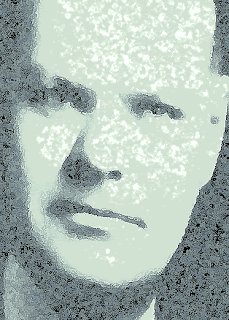

At least not identified as such.
But he is there, buried inside a group shot.
Here are a few - quality varies from poor to acceptable, but "better than not"... so enjoy !
IMAGES OF MARTIN HENRY DAWSON




Wednesday, July 14, 2010
Healing the Heartless
Seventy Five Million people - at least - had their lives greatly shortened by the events of World War Two.
Died. Dead. If not during the war itself, then not long after.
Set against that toll (the worst ever disaster in human history) the act of extending, for a few years, the lives of about 25 civilians with a physical heart disease may not stack up for much.
Connecting the two - vast military forces raging overseas with a small quiet medical affair that could have just as easily happened in peacetime - may seem impossible.
But I think there is a strong connector and it is that the curing those physical heart cases was dependent on first healing some Home Front civilians of a metaphorical heart disease far more deadly than Endocarditis : Scientific Heartlessness/ Scientific SansCoeur.
Calling upon Science and Nature to justify a lack of compassion for those not among your own kind was Modernity's abiding moral failing.
It was displayed not just during modern warfare or in everything that Hitler ever did - it was habitual, in varying degrees, among most all of us back then.
Only Time will tell us what abiding moral failings of this postmodernist/quantum/commensal age will engender - I am sure that Heartlessness will be chief among them.
But hopefully we will no longer boast about our heartlessness as being based on the best scientific discoveries from Nature.
The decline of Modernity came not from any external assaults, rather it rotted from within, from among its strongest supporters, the Scientist.
This happened when a few, then some, and finally many, saw that Nature did not favour heartlessness at all but rather the opposite, and translated that new knowledge into concrete human behavior : they changed their day-to-day ethics accordingly.
It wasn't a rapid or smooth process nor has it ended yet but it had to start somewhere and Dawson's story is as close to the beginnings as I have been able to find AND it had consequences that we have all felt personally - so it it is an excellent place to start recalling when Mo went Po, if only because the first person cured of the metaphorical heart disease was Dr Dawson himself.
Not that he was heartless by any means anytime in his life, but he was a proud member of a relatively new profession, that of the Clinical Investigator, which had the potential for exposing all the ambiguities of Modernity's reforming spirit.
Only when Dawson started questioning the disinterested objectivity he always had upheld so strongly, was he himself on the road away from Mo and heading for Po.....
Tuesday, July 13, 2010
Skyscraper Genetics;Sidewalker Genetics
The age old story of the world , the insiders trying to keep the outsiders out, is brought to a permanent boil in New York City.
The verticality of the skyscraper is a truly fitting and 'deep' metaphor for Modernity : it represents Modernity's need to categorize everyone and everything into a vertical hierarchy of increasing (imagined) 'fitness' and worth.
The assumption is that your worth depends on your inherited genetics which are fixed and change only at the place of glaciers - genetics you inherit strictly from your parents - no miscegenation between species or races here !
By contrast the H in HGT (Horizontal Genetic Transfer), is a fitting symbol for this new, Quantum-Postmodern- Commensal Age.
It merely institutionalizes the reality of global commensality that since we have to exist together cheek to jowl on this Planet,diners at a common table, we might as well resolve to make the best of it and make use of the best of each other's ideas.
In fact, our lives probably depend on us doing so.
So the horizontality of a modern library with its branches stocks of books shared all over the city and all of it part of a continent or world wide system of inter-library loans best represents in human terms what HGT is to the microbe world.
Once named by very early explorers as a natural Arcadia, New York under Dewitt Clinton became the ultimate Synthetic Arcadia, with his rigid and orderly grid system of streets and avenues and buildings demanding that Nature yield to the Will of Man.
But the dirty, noisy,vibrant,disorderly, messy immigrant-burdened sidewalks -where two strangers' eyes can meet and romance bloom; those sidewalks,and those unruly sidewalkers, they,they are Nature's Revenge !
Subscribe to:
Posts (Atom)